
Short answer: yes, dropshipping is legal in most markets. It is a fulfillment model, not a legal loophole. You can sell a product without storing or shipping it yourself, but you remain responsible for what the customer buys, the promises made on your store, and the supply chain issues that can affect what happens after checkout.
That distinction matters. Your dropshipping agent or supplier may source, pack, and ship the order, but regulators, marketplaces, payment providers, and customers usually look to you—the seller when a product is unsafe, counterfeit, late, misdescribed, or impossible to return.
This guide explains the main dropshipping legal requirements for sellers targeting the United States, United Kingdom, and European Union. It also covers the Amazon and eBay rules that cause many otherwise legitimate stores to lose their selling privileges.
Important: This article provides general information, not legal or tax advice. Requirements vary by product and destination, and rules can change. Confirm your obligations with the relevant authority or a qualified professional before launching in a new market.
Is Dropshipping Legal—or Is It a Scam?
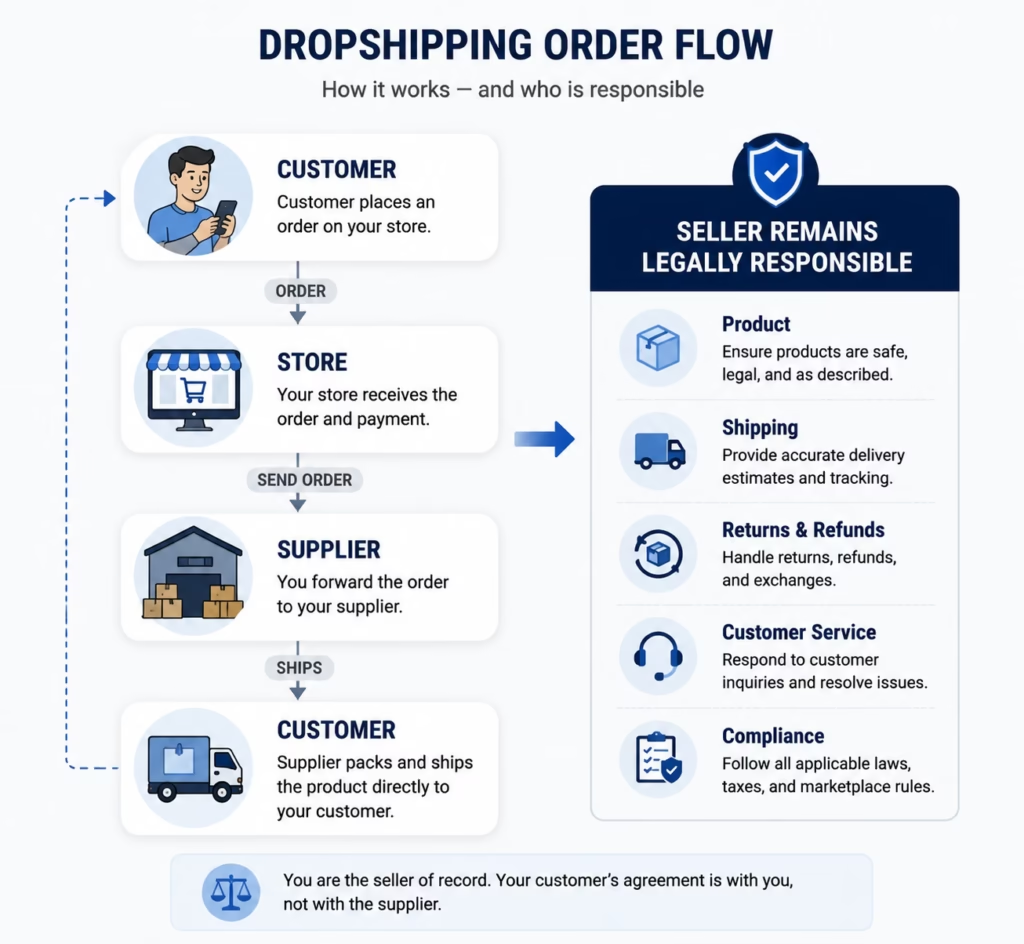
Dropshipping itself is legal. A normal, compliant transaction looks like this:
- A customer places an order with your store.
- Your store collects the payment and sends the order to a supplier or fulfillment partner.
- That partner packs and ships the product to your customer.
- You remain responsible for the listing, customer service, delivery promise, returns, refunds, and product compliance.
The model becomes illegal or non-compliant when the seller uses it to mislead customers, sell prohibited or counterfeit goods, ignore product-safety rules, evade taxes, or violate a marketplace agreement.
In other words, the question is not only “Is dropshipping legal?” The better question is: Is this product, listing, supplier, shipping promise, and sales process compliant in every market where I sell?
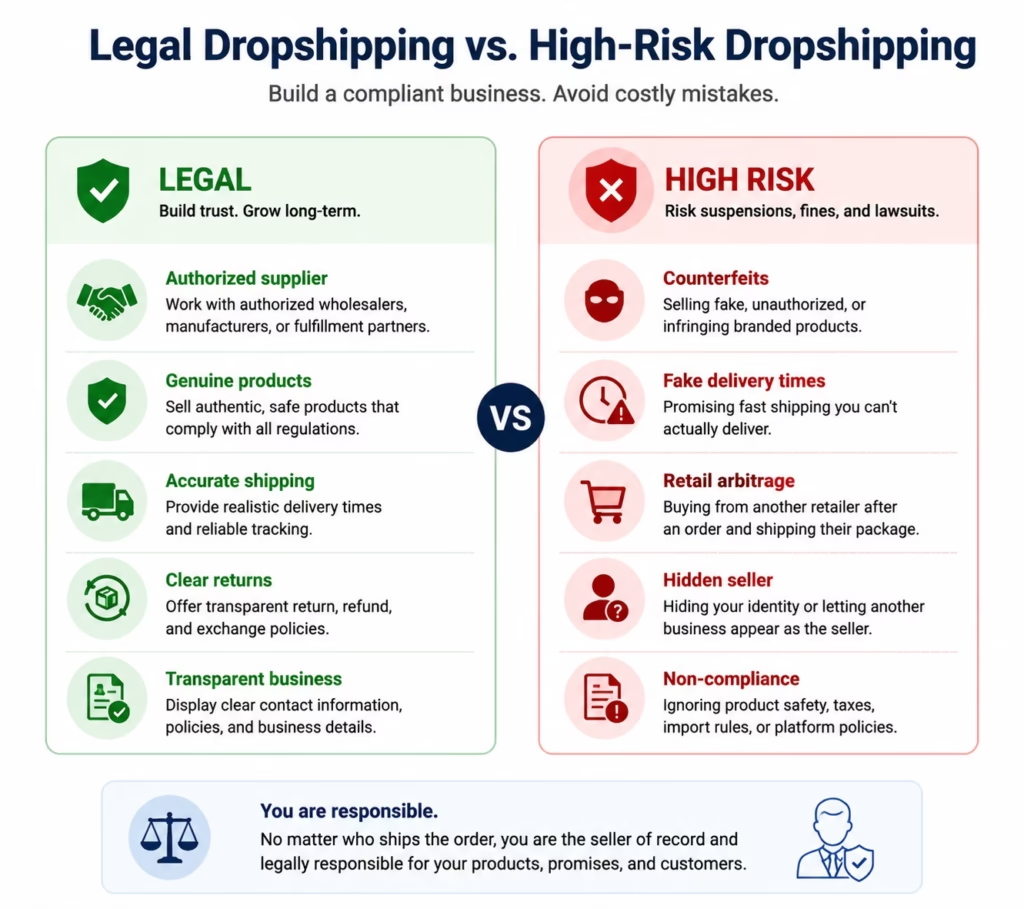
Legal Dropshipping vs. High-Risk Dropshipping
| Usually compliant | High-risk or prohibited |
|---|---|
| Using an authorized wholesaler, manufacturer, or fulfillment partner | Buying from another retailer after a customer orders and sending the retail package to the customer |
| Selling authentic, tested products with accurate descriptions | Selling counterfeits, unauthorized branded goods, or products with copied images and claims |
| Showing realistic delivery times and tracking | Advertising “3-day delivery” when the supplier normally takes three weeks |
| Publishing clear return, refund, privacy, and contact information | Hiding the business identity or making returns practically impossible |
| Checking safety, labeling, and import requirements before listing a SKU | Assuming the factory is responsible for compliance in every destination country |
| Identifying your business as the seller of record where a platform requires it | Allowing another retailer or supplier to appear as the seller on invoices or packaging |
7 Dropshipping Legal Requirements Every Seller Should Know
1. You remain responsible to the customer
Outsourcing fulfillment does not outsource accountability. If a parcel is lost, the wrong item arrives, or the product does not match the listing, the customer contacts your store—not the factory.
Your terms with a supplier should clearly assign responsibility for:
- inventory accuracy;
- product specifications and approved samples;
- quality-control standards;
- dispatch time and tracking updates;
- damaged, missing, and incorrect orders;
- recalls and safety incidents;
- returns, replacements, and reimbursements;
- use of your brand, packaging, and customer data.
A written supply or fulfillment agreement is safer than relying on chat messages and verbal promises.
2. Delivery claims must be accurate
Shipping speed is not just a conversion-rate issue. It can also be a consumer-protection issue.
In the United States, the Federal Trade Commission’s Mail, Internet, or Telephone Order Merchandise Rule requires sellers to have a reasonable basis for the shipping time they advertise. If no shipping time is stated, the seller generally needs a reasonable basis to expect shipment within 30 days. When the promised time cannot be met, the seller may need to obtain the buyer’s consent to the delay or issue a prompt refund.
That means your supplier’s processing time, inventory availability, carrier handoff, and peak-season capacity should support the promise displayed on your product and checkout pages.
Build a delivery promise from measured data—not the fastest shipment your supplier has ever achieved.
3. Products must be safe and compliant in the destination market
One of the biggest dropshipping mistakes is assuming that a product available from a factory is automatically legal to sell worldwide.
Requirements can depend on the product’s category, materials, intended user, claims, batteries, radio components, ingredients, and destination. Children’s products, cosmetics, supplements, electronics, medical devices, and products containing hazardous materials often require additional documentation, testing, warnings, or registrations.
For U.S. sales, the Consumer Product Safety Commission provides specific guidance for online sellers, importers, and drop shippers. Selling a recalled product is unlawful. Depending on the category, an importer or manufacturer may need test reports, tracking labels, or certificates such as a Children’s Product Certificate.
For EU sales, the General Product Safety Regulation (GPSR) requires consumer products to be safe and traceable. Products covered by the regulation need a responsible economic operator in the EU, and distance-sale offers must include specified manufacturer or responsible-person details, product identification, and relevant warnings or safety information.
Before approving a SKU, collect the documents for the exact product version you will sell. A certificate for a similar model, different material, or another factory is not reliable evidence.
4. Do not infringe trademarks, copyrights, or patents
You cannot legally sell a counterfeit because a supplier calls it a “replica,” “inspired” product, or “1:1 version.” You also should not copy a competitor’s product photos, descriptions, packaging, logo, or protected design.
Check whether:
- the supplier is authorized to sell third-party branded goods;
- your proposed brand name and logo conflict with existing trademarks;
- product images and creative assets are licensed to your business;
- the product or packaging may infringe a design or utility patent;
- your private-label agreement clearly defines ownership of artwork, molds, tooling, and new product designs.
If you are building a long-term brand, keep authorization letters, invoices, design files, and intellectual-property agreements in one accessible record.
5. Prices, claims, returns, and business details must be transparent
Your store should clearly disclose the total price, relevant delivery costs, expected delivery time, returns process, contact information, and any material limitations before the customer buys.
Product claims also need evidence. Avoid unsubstantiated claims such as “clinically proven,” “FDA approved,” “cures pain,” “100% safe,” or “guaranteed results.” A supplier’s product-page copy is not proof.
Rules differ by market. For example:
- United Kingdom: distance sellers must provide specified pre-contract information, including business identity, pricing, delivery, and cancellation details. Customers generally have 14 days after delivery to cancel eligible orders, and goods generally must be delivered within 30 days unless another timeframe was agreed.
- European Union: eligible distance-sale customers generally have a 14-day withdrawal period. EU rules also provide a minimum two-year legal guarantee for faulty goods or goods that do not match their description.
Some products and customized goods may be subject to exceptions. Do not copy a generic returns template without checking whether it fits your products and target market.
6. Handle taxes, customs, and customer data correctly
Dropshipping can create obligations in more than one jurisdiction. Your store, supplier, customer, payment entity, and importer may all be in different countries.
Before launching a market, establish:
- which legal entity is making the sale;
- whether business, sales-tax, VAT, GST, or other registrations are required;
- who is the importer of record;
- who pays duties and import taxes;
- how the product will be classified for customs;
- which invoices and declarations accompany the shipment;
- where returns will be received;
- how customer names, addresses, phone numbers, and order data are shared and protected.
Using DDP shipping can reduce surprise fees for customers, but it does not by itself resolve every tax or importer obligation. Confirm the structure for each sales channel and destination.
For stores shipping internationally, ASG’s cross-border ecommerce service coordinates routing, customs documentation, localized delivery, and international returns. Legal and tax advice should still come from qualified professionals in the relevant market.
7. Follow each marketplace’s dropshipping policy
A business model can be legal under national law and still violate a marketplace’s contract.
Is dropshipping legal on Amazon?
Amazon allows dropshipping only when the customer can clearly identify you as the seller of record and you follow Amazon’s other requirements. Amazon’s published guidance says a third-party seller or supplier must not appear instead of you on packing slips, invoices, external packaging, or other information included with the product. You also remain responsible for processing returns.
Buying from another online retailer and having that retailer ship its branded package directly to an Amazon customer is a common policy violation.
Is dropshipping legal on eBay?
eBay allows fulfillment directly from a wholesale supplier. However, listing an item and then buying it from another retailer or marketplace that sends it to the customer is not allowed. The eBay seller remains responsible for safe, on-time delivery and buyer satisfaction.
Always check the current policy for every platform you use. A rule that applies to your Shopify store may not be accepted on Amazon, eBay, Etsy, TikTok Shop, or another marketplace.
Dropshipping Laws by Market: A Quick Comparison
| Market | Key areas to verify | Practical action |
|---|---|---|
| United States | Shipping promises, product safety, advertising claims, state tax obligations, privacy rules | Build evidence for delivery claims; identify the importer; check CPSC requirements and recalls |
| United Kingdom | Business disclosures, delivery terms, cancellation and refund rights, VAT/import responsibilities, product safety | Publish compliant pre-contract information and create a workable 14-day cancellation process |
| European Union | Consumer withdrawal and guarantees, GPSR, responsible economic operator, VAT/import rules, GDPR | Add required traceability and safety information before the listing goes live |
| Amazon | Seller-of-record identity, neutral or seller-branded packaging, returns, restricted products | Use a supplier agreement that removes third-party seller details from the parcel |
| eBay | Wholesale-supplier fulfillment, accurate delivery, returns, authentic products | Do not use retail-to-retail fulfillment after receiving an order |
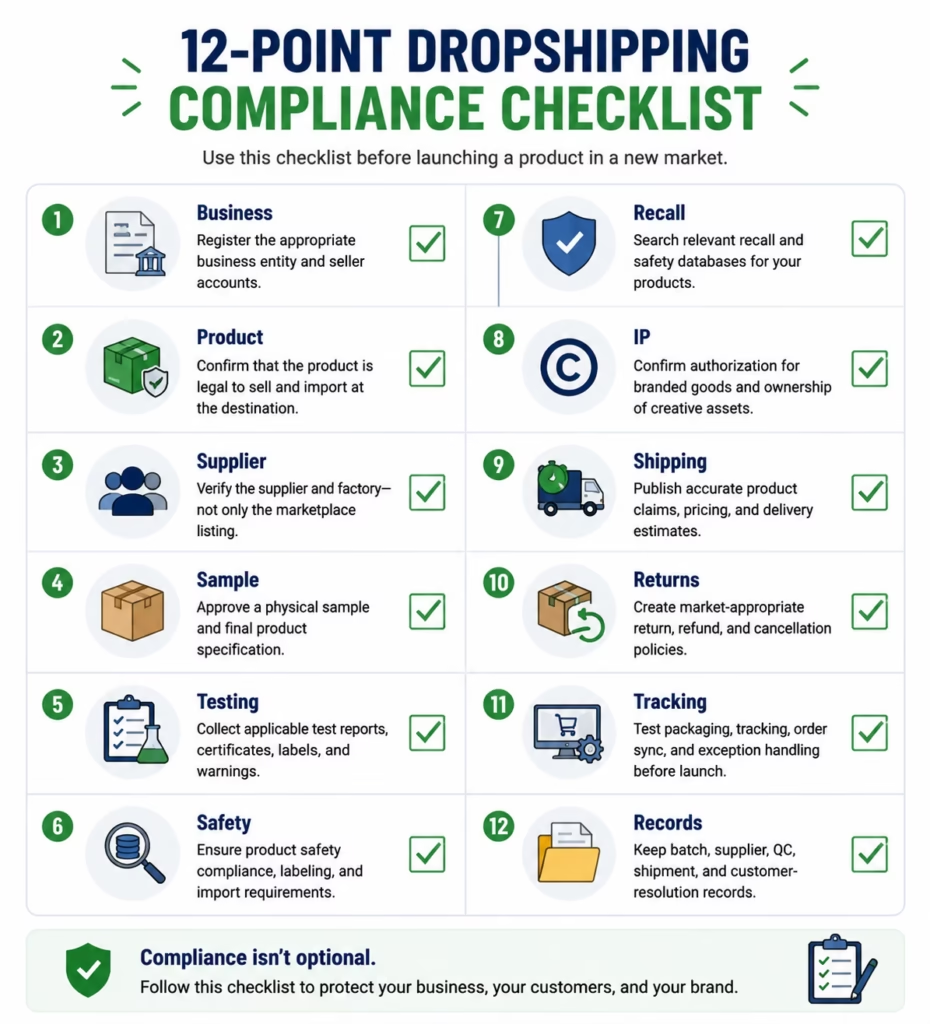
A 12-Point Dropshipping Compliance Checklist
Use this checklist before publishing a product in a new market:
- Register the appropriate business entity and seller accounts.
- Confirm that the product is legal to sell and import at the destination.
- Identify the seller and importer of record.
- Verify the supplier and factory—not only the marketplace listing.
- Approve a physical sample and final product specification.
- Collect applicable test reports, certificates, labels, and warnings.
- Search relevant recall and safety databases.
- Confirm authorization for branded goods and ownership of creative assets.
- Publish accurate product claims, pricing, and delivery estimates.
- Create market-appropriate return, refund, privacy, and cancellation policies.
- Test packaging, tracking, order sync, and exception handling before launch.
- Keep batch, supplier, QC, shipment, and customer-resolution records.
ASG can support the operational side of this checklist through vetted product sourcing, quality control, branded packaging, and store integrations. For private label or custom development, define compliance targets during product specification—not after mass production. Explore ASG’s custom and branding options.
How to Make Legal Dropshipping Easier to Scale
Compliance becomes harder when product information is scattered across supplier chats, spreadsheets, and marketplace listings. A scalable operation needs one version of the truth for each SKU and each order.
Start with five controls:
1. Maintain a compliance file for every SKU
Store the approved specification, factory details, test reports, certificates, label artwork, safety warnings, batch records, and target markets together. Add expiry dates and owners to documents that require renewal.
2. Use pre-shipment quality control
Compliance documents do not guarantee that the finished item matches the approved sample. Inspect the product, accessories, labels, packaging, and order data before dispatch. Save photographic evidence for higher-risk categories and recurring defects.
3. Connect inventory and order systems
Late orders often begin with inaccurate inventory or delayed order transmission. Automatic order, inventory, and tracking sync reduces manual errors and gives customer-service teams better information.
4. Create a country-by-country SKU matrix
A product suitable for the U.S. may need different labels, warnings, documentation, or components for the EU or UK. Mark each SKU as approved, restricted, or blocked by destination. Do not rely on a universal “ships worldwide” setting.
5. Plan returns and recalls before you need them
Define who receives a return, who inspects it, how the customer is refunded, and how affected batches are identified. A recall plan should connect order records to SKU and batch data so impacted customers can be found quickly.
Frequently Asked Questions
Is dropshipping legal in the USA?
Yes. There is no general U.S. law banning dropshipping. However, sellers must comply with applicable federal and state rules covering areas such as shipping promises, product safety, advertising, taxes, privacy, and intellectual property. Requirements vary by product and where the business and customer are located.
Do I need a business license for dropshipping?
Possibly. Licensing and registration requirements depend on your legal entity, location, products, and customer markets. A marketplace account does not replace any registration, tax, or product-specific license your business may need.
Is AliExpress dropshipping legal?
Using AliExpress as a sourcing channel is not automatically illegal. The risk depends on the product, seller authorization, product safety, delivery claims, destination-country rules, and the policy of the sales platform you use. Ordering from AliExpress after an eBay sale, for example, can violate eBay’s retail-arbitrage restriction.
Can I dropship branded products?
Only when you have the right to sell them and the goods are authentic. Ask for authorization and traceable commercial invoices. Avoid suppliers offering replicas, altered logos, or branded goods without credible documentation.
Who is responsible if a dropshipped product is unsafe?
Responsibility depends on the jurisdiction and the parties’ legal roles, but the online seller cannot assume the overseas factory carries every obligation. Sellers, importers, manufacturers, authorized representatives, marketplaces, and fulfillment providers can have different duties. Identify those roles before selling the product.
Sources
- FTC: Mail, Internet, or Telephone Order Merchandise Rule
- CPSC: Online Sellers’ Safety Guide
- GOV.UK: Online and Distance Selling
- Your Europe: Consumer Guarantees and Returns
- EUR-Lex: General Product Safety Regulation
- Amazon Seller Forums: Amazon Drop Shipping Policy Guidance
- eBay: Dropshipping and Product Sourcing Policy